
What happens when you put technologists, ecumenical faith leaders, educators, scholars, students, and policymakers in the same room for three days straight to talk about what it means to be human in the age of AI? You get the DELTA Summit here on the Notre Dame campus.
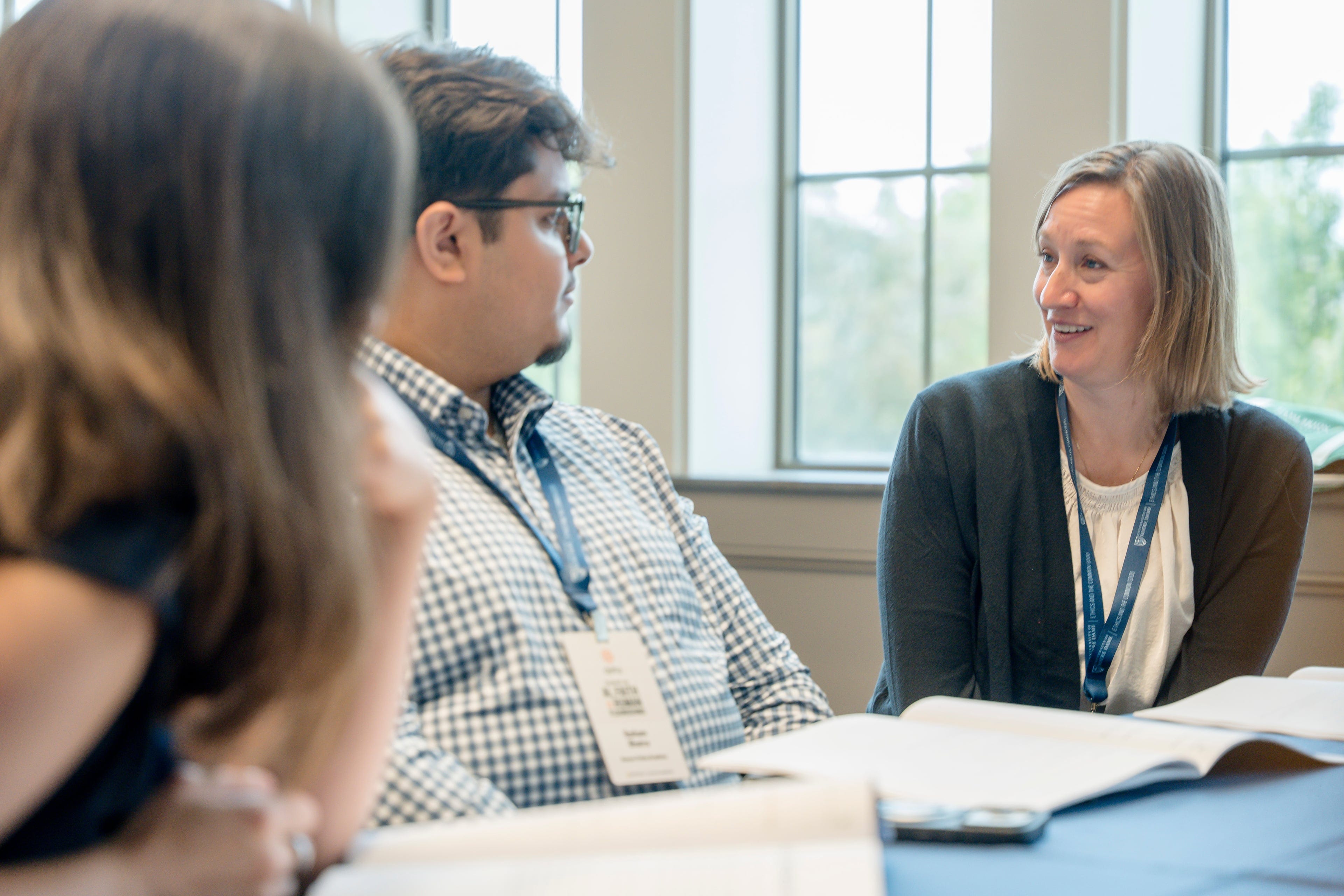
It’s officially two days post-Summit, and we’re still basking in the glow.
We’ll offer a full post-Summit download soon, but while it’s still fresh, we want you to hear from the people who were in the room where it happened.
Below you’ll find reflections from a small sampling of attendees on what they learned, challenges and opportunities, and where we go from here.
Michelle Cho
Assistant Principal, Academic Innovation
Santa Margarita Catholic High School
I left the Summit with profound gratitude and peace about living in this moment of AI. Cardinal Cupich reminded us that while machine learning may be new, the impulse to reduce and judge others is not. The Romans saw Matthew as an economic unit, while many Jews saw only a sinful tax collector. But Jesus, who took on human nature, saw Matthew’s God-given dignity and called him to conversion, showing us how to avoid dehumanizing others. This is our greatest superpower: AI will never share in our capacity to know, love, and commune with God and one another. Between the Sacraments, Scripture and Tradition, Pope Leo, the people of goodwill (i.e., DELTA!), and the Holy Spirit, I have new appreciation for the verse, “My grace is sufficient for you, for power is perfected in weakness.” (2 Cor. 12:9)
Timothy Crouch
Senior Manager, University Partnerships
The Veritas Forum
Christian conversations about our ever-more-ubiquitous algorithmic digital technologies tend to be fragmentary and disintegrated: tech workers talk only to tech workers, pastors to pastors, educators to educators, and lessons painfully learned in one quarter go unheeded or unheard in others. Against this background, I am immensely grateful for and impressed by the DELTA team’s commitment to reintegrating the conversation, inviting all these groups and more to the table and offering us a feast of Christian wisdom. At this year’s DELTA Summit, I enjoyed rich, illuminating conversations with educators, tech workers, pastors, theologians, and—high school students! If we can learn from one another, we can work together. DELTA is doing essential work de-siloing the conversation about life in a world with powerful artificial intelligence, and offering us all a vision that will make that world better.
Glen A. Guyton
Executive Director
Mennonite Church USA
How do we keep AI from killing us? Well, the DELTA Summit is a start. You get smart people from different backgrounds together and you have them explore questions like: What must I do to be more human?
My biggest takeaway from the DELTA Summit is dignity. Unlike the machines and algorithms that are causing unparalleled disruption in our lives, we humans are unique in our dignity. The machines and tools that we are building are useful only so far as their ability to produce or drive efficiency. Our value as human beings transcends that. We are conscious, we are love, we are intelligent, we are made in the image of God. While AI and the machines may extend the reach of our humanity, they can never fully replace it.
Scott Hurd
Vice President of Leadership Development and Catholic Identity
Catholic Charities USA
At the DELTA summit, I feel like I’m with “my people.” As we navigate this new epoch of AI, being surrounded by others committed to “safeguarding humanity”—to borrow a phrase from Pope Leo – is both encouraging and inspiring. I find myself filled with much-needed hope that the dire future predicted by some is not inevitable, but that by acting together we can shape a world that embraces the gifts of new technologies while honoring what is unique, beautiful, and dignified about the human person, created in God’s image.
I was especially impressed by the large contingent of young people—GenDELTA —who are lending their voices and talents to this effort with courage and faith. Kudos to the Notre Dame Institute for Ethics and the Common Good for another outstanding event and for the leadership and vision you provide us all.
Benedict Klee
High School Student
Trinity Academy
We had probably never learned so much in 48 hours before; the academic
conference-y planning was excellent. But what I think was just as important was the great care and deliberation that clearly went into making the Summit such a great environment for building connections with new people. That was the most valuable takeaway for me: being able to encounter so many incredible, intelligent, wonderful people who I sometimes disagreed with, but who were absolutely united in the way.
All in all, though, the Summit was an experience I value very much, and it opened the door to a whole lot of academic and career possibilities that I could definitely see myself exploring in the next few years and maybe beyond. And more immediately, it was a great three-day human formation experience for me.
Kyle Lierk
Dean of Benedictine Bridging & Belonging
Woodside Priory School
When Father Dowd, Notre Dame’s president, welcomed us at the opening dinner, he corrected a misstep he said he made at the preceding Mass when he called this gathering a “conference.” Looking directly at Meghan Sullivan, founding Director of Notre Dame’s Institute for Ethics and the Common Good, he said, “This is a summit!”
After 2 ½ days on the beautiful grounds of this campus interacting with young people (a.k.a. GenDELTA), educators, faith leaders, tech innovators and so many more, we have not simply conferred on our thoughts about the dance taking place between technology and human flourishing at this time in history. No, that would be far too passive. We don’t have time for passivity. Instead, we have packed up all of our expertise, questions and curiosities, established trust that only comes through radical hospitality, leaned into the work, and supported each other on our way to the great heights of this current reality in which we are all living.
I can’t help but hear Rev. Dr. Martin Luther King’s words from his speech to striking sanitation workers in Memphis, Tennessee, in 1968 reverberating through this time we have spent at the Summit: “I don’t know what will happen now. We’ve got some difficult days ahead. But it doesn’t matter with me now. Because I’ve been to the mountaintop…And I just want to do God’s will.”
Victoria Lorrimar
Director
Centre for Technology and Human Futures, University of Notre Dame Australia
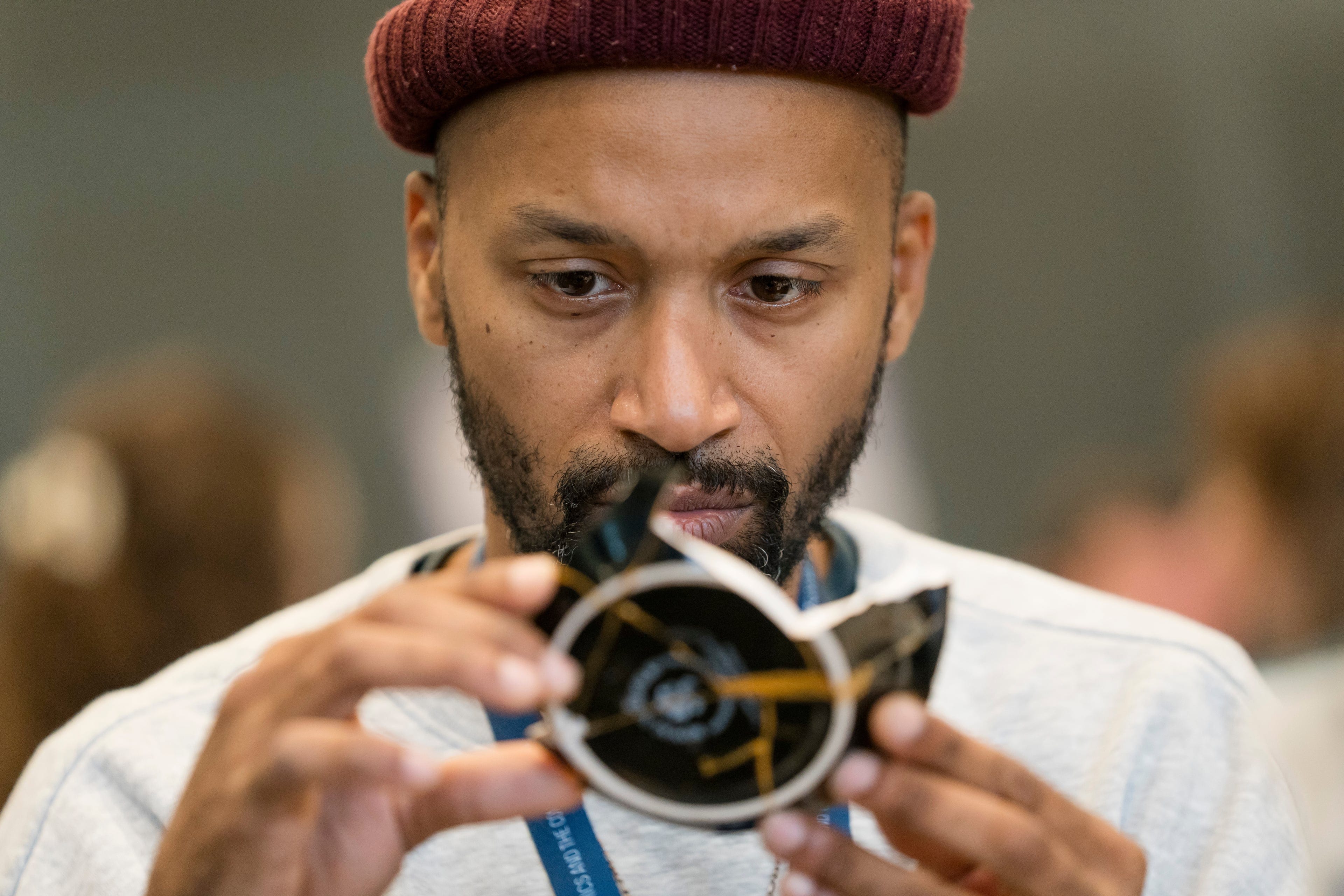
The DELTA initiative really threads the needle well when it comes to “safeguarding the human person” (as the recent encyclical puts it) and the substantial role that artificial intelligence technologies will occupy in the human futures we’re building. Their approach brings students and educators and ministers together with tech professionals in genuine dialogue, and the unabashed focus on human embodiment at this year’s summit was refreshing. In a “living the letters of DELTA” session I got to try out Kintsugi (super fun, but definitely confirmed I’m more equipped for a life of the mind!), and closing a day with evening worship in the Grotto was a special moment.
The intentional incorporation of perspectives from high school and university students was another unique feature of the event. Typically, students are framed as the beneficiaries in these contexts, receiving the wisdom of established scholars or community and industry leaders. The notion of Generation DELTA flipped the script and student voices were highlighted not only through official programming, but also in the careful coordination and curation of meal time interactions that ECG [the Institute for Ethics and the Common Good] has become known for.
I’ve come away from this DELTA summit with a renewed enthusiasm for the collaborative effort of wrestling with the implications of AI and emerging technologies for our shared life and commitment to the common good. There is bottomless demand for engagement that takes education, faith, contemplation, and moral formation seriously without retreating into wholly defensive positions, and I’m excited for the resources that will continue to come out of DELTA to support that kind of engagement.
Pauline Lu
Student
Calvin University
As a member of GenDELTA, I am inheriting an age of AI that is constantly reshaping our education, society, job prospects, and communities. With so many narratives vying for our attention, it can be daunting to know which voice to trust. So, the most encouraging part of the DELTA Summit was receiving a faith-grounded framework to process it all, one that reminds us of our greater salvation and our identity in Christ and as human beings. It was beautiful to see people across denominations, traditions, and backgrounds united under one common God and one common gospel message. This is what makes the DELTA framework and the lessons from this conference so timeless. I left the DELTA Summit reminded of about who we are, a community made in the image of God, who belong to Him and to one another, and that is what will help us navigate this landscape of AI.
Karen Wright Marsh
Executive Director
Theological Horizons
“Ultimately, there are two things: love and fear.” (Anthony de Mello, SJ)
At the DELTA Summit, my own fear was met with love, love in the flesh: tangible in the high school student across the dinner table, the engineer on the podium, the staff member at the door, the colleague in conversation, the friend within the candlelit Grotto. The gathering spirit of stubborn hope and radical hospitality made real for me the DELTA network’s claim that “each person is radically, infinitely, intrinsically valuable.”
Jack Rankin
Student
University of Notre Dame
The DELTA Summit helped me to understand that we’re all just humans, under a wide array of pressures, trying to conserve our attention to the small things in life. I loved D. Graham Burnett’s keynote point that everything our phones contain, from Gmail to Gemini, is a “human fracking machine” working to destroy our attention. To be human means to truly realize that someone else is real, and that requires deep attention and care.
Walking away from this Summit, I’m so grateful that I have a community behind me of people all trying to reclaim their attention and strengthen their humanity in the age of AI, and that fills me with so much purpose and hope.
John P. Slattery, PhD
Executive Director
Grefenstette Center for Ethics, Duquesne University
A cooking class turned the corner for me. The Notre Dame DELTA summit was already an excellent experience with wonderful networking opportunities, lectures, and conversations, but on Tuesday afternoon I stood in the basement of an Italian restaurant and made pasta.
Now, for those uninitiated, making pasta is not incredibly difficult. It is a matter of folding, rolling, resting, and, eventually, cutting the dough into whatever shape your heart desires. As the chef taught, it is an ancient practice that has, of course, been subsumed completely into robotics and machinery. Millions of tiny cardboard boxes of perfectly-shaped spaghetti and fettuccini are created by robots and sold every day by enormous supermarket chains.
But on Tuesday, in the basement of an Italian restaurant, we understood the joy and the community that comes with crafting the simplest of meals by hand. So much of the DELTA framework reflects this capturing of humanity against the onslaught of digitalization, but on Tuesday, I clung desperately to my Embodiment, Agency, and, of course, Love.
Luke Witvliet
Medical Student
Michigan State University College of Human Medicine
In an age of AI, we come to realize that what makes us human are all the things the machine can’t do! The machine can’t cry, can’t love, can’t be curious, can’t stand stunned in the face of beauty. A healthy path forward rightly contextualizes AI as a tool to advance human flourishing and relationality.
Some key takeaways:
• Interdisciplinary, inter-age, inter-background conversations are crucial
• Beauty will save the world
• Process, struggle, imperfection, and growth are part of our humanity
• Love is at the center
Wow. That sounds like an amazing experience. I can't wait to hear more insights.
This sounds like it was fruitful, and as a Catholic HS Computer Science teacher, I am so grateful to be plugged into DELTA and learning alongside you - thanks for sharing! I can't wait to listen to the keynotes!