Taking Inspiration from the "Hostess City of the South"
A step-by-step recipe we invite you to steal and try in your own educational community

Leave it to the Jesuits to cook up a teaching workshop titled “Eloquentia Perfecta in the Time of AI.” (I’m not picking on the Society of Jesus, I’m savoring them. After all, I’m a product of their pedagogy, a former faculty member at one of their fine high schools, and someone who, a million moons ago, came darn close to showing up for the novitiate I was slated to enter after a year of candidacy.)
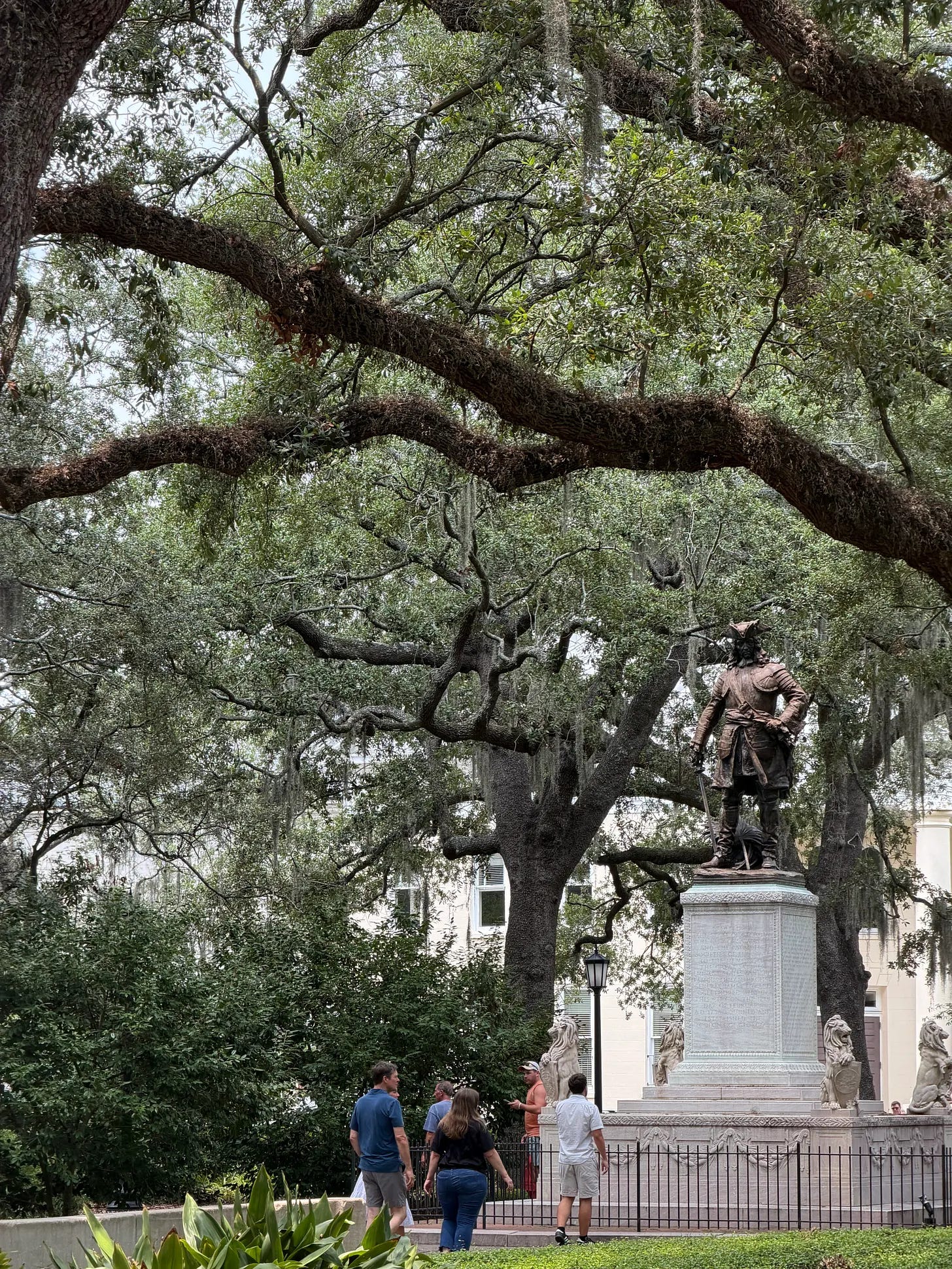
Earlier today, Meghan Sullivan and I had a blast chopping it up with representatives from each of the Eastern province secondary schools, convened in wonderful Savannah, Georgia, by Mario Powell, SJ, (incidentally, one of the cooler customers you’ll ever encounter) who holds the crucial role of Provincial Assistant for Secondary and Pre-Secondary Education, a Jesuitical mouthful that basically means “guy in charge of how we make Ignatius’ prescient vision for learning real in the world today.” As Meghan and I sipped iced vanilla lattes in the delightful Gallery Espresso and unpacked the 2.5 hours we had just spent with the group, we decided I ought to post a little how-to guide for pulling off one of the moves we had just recommended: the mythical (and deceptively simple) “dignity of learning dinner,” designed to bind together and galvanize any given school community in this decidedly rowdy time.
So here’s the deal. Various members of your school community need to verbalize what they’re going through. It’s part of sense-making in a weird era, part of venting the stress they’re all carrying—metabolizing it, we might say.
And they need to see that you as teachers and administrators are grappling with the tensions baked into the moment and not blithely and confidently careening down the EdTech expressway, taking as gospel the dubious logic underlying the inevitability narrative of the technocratic paradigm. While this isn’t a panacea, I promise you that doing a version of what I outline below will be a good use of your precious resources.
Gather a grab bag of students, teachers, parents, leaders, trustees, and donors.
Find a venue that serves decent food (or heck, make it a potluck) and also feels special by whatever criteria matter to you. It helps if the acoustics are such that people can hear one another while they’re talking (it will be obvious why that matters in a minute).
Divvy folks into tables of 6-8 (no more) and then—this is a critical step—force assigned seating that creates a mixture of different “types” at each table. Siblings, spouses, or BFFs cannot sit together.
Have somebody set the tone for the evening with brief welcoming remarks and make sure that the vibe is hopeful and positive. If your school is blessed with a workable mission statement, use it. If not, you could always co-opt Pedro Arrupe’s timeless zinger that our prime educational objective is to form women and men for others for the greater honor and glory of God. Hard to improve on that, honestly.
Now the real work of the evening begins (and you say as much: they’re the main event and they’re doing the important work). Each table has a set of questions to which they’ll share their answers. First—perhaps while people are waiting to be released for the buffet, if you go that route—have them share with one another a recent anecdote from their life wherein they personally experienced something that showcased or encapsulated one facet of what it means to be a human being. Doesn’t have to be particularly profound, doesn’t have to include an expansive or exhaustive definition of personhood. Just a story. It helps prime folks for genuine encounter and keeps the main thing the main thing, as they say.
Once everyone’s gotten some grub and broken the ice, next comes the main event. We at the Institute for Ethics and the Common Good like a set of three particular prompts, but feel free to tweak them or make them your own. Ours are: A) Tell a concrete story from your life as a student or teacher when you experienced the fullest, richest, or highest sense of learning. What were the ingredients? B) What, to you, is the ultimate goal of education? Is there a pearl of wisdom from a favorite thinker or role model that captures it? And C) Can you identify a practical way to help make the dignity of learning real in high schools and colleges today? Consider everything from small tweaks to radical steps.
Once everybody’s has adequate time to break bread and share their stories, have the host get up and facilitate a popcorn-style “share out,” ideally having the youngest person at each table be its spokesperson. (Just do it. It’ll pay dividends.)
Bonus points if you carve out the space to do a little dessert reception. In our experience, people are more poised for substantive connection after this discussion than they were at the outset, when they walked in and sought out the comfort of close acquaintance. They’ve been loosened up a bit now, and reminded of what inspires them, so maybe over a brownie and some decaf, they’d be more likely to forge a bond with someone new in your beloved community. And what’s better than that?
Here’s what you’ve just done together: you’ve articulated a lodestar of what learning can and could continue to be. Great if you’re able to capture some of it and summarize the salient points in a follow-up communication, but even if you don’t, I think you’ll find that people will adopt a more receptive posture when you roll out the inevitable updates to your policies in the face of this disruptive AI-shaped elephant hulking in the corner of the classroom.
Tangentially, it occurred to Meghan and me that in this phase of heavy travel for DELTA, some of these Substacks could serve as a travelog of sorts as we zigzag across tarnation doing what we feel can only be done properly eyeball-to-eyeball with people of goodwill. And in service of the E (embodiment) and T (transcendence) of the DELTA movement, maybe we could even highlight some of the remarkable wonders we discover along the way.
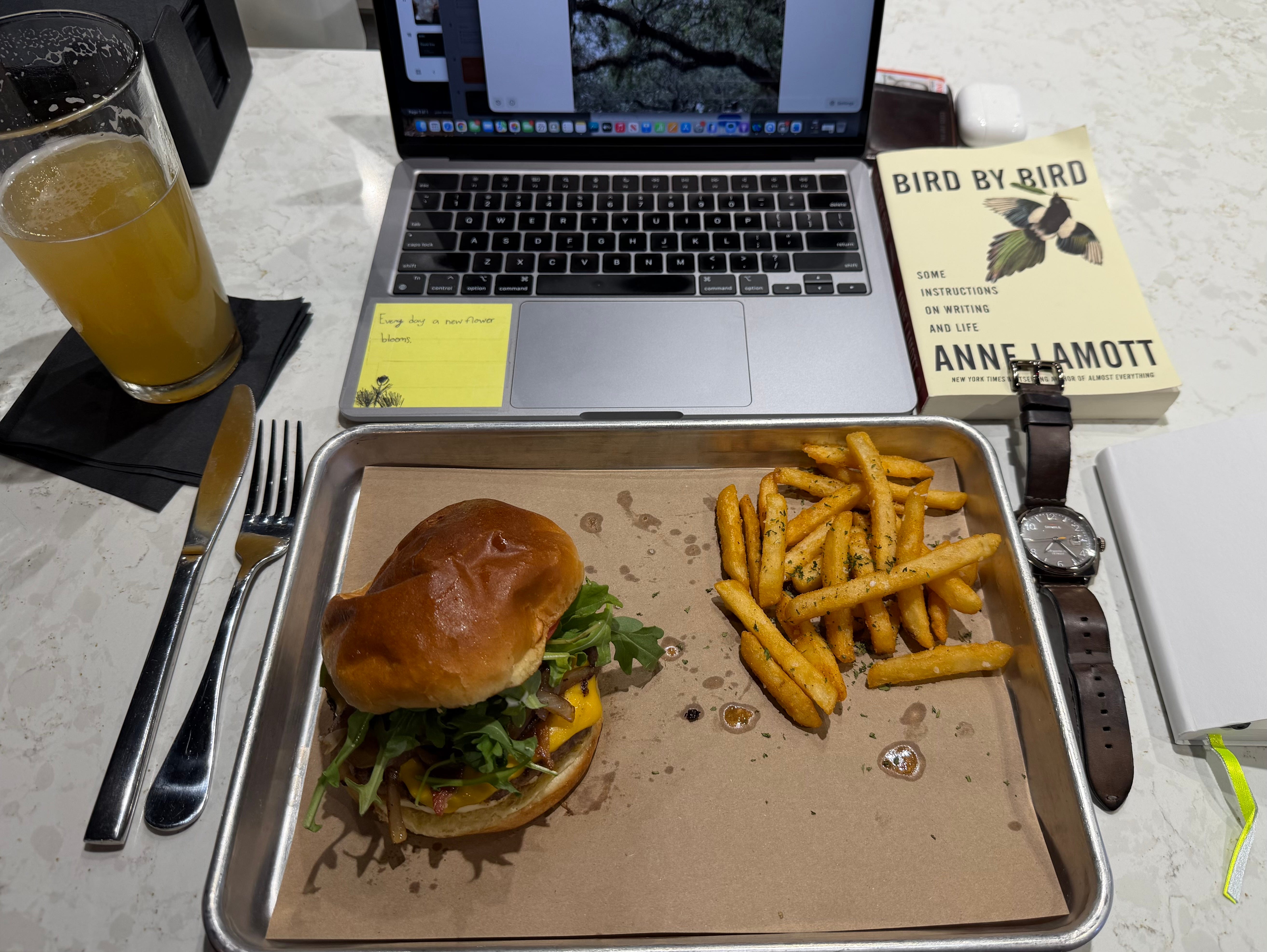
In that spirit, I’ve gotta mention that the burger I had at Beercode at the far end of Terminal A in the Atlanta airport while we waited out a pesky thunderstorm was an unexpected 10/10, enhanced by the skillful banter of Tanika the bartender and a random collection of waylaid travelers who, spurred on by our hostess, managed to manufacture together some collective effervescence despite the steady string of delays we were each weathering.
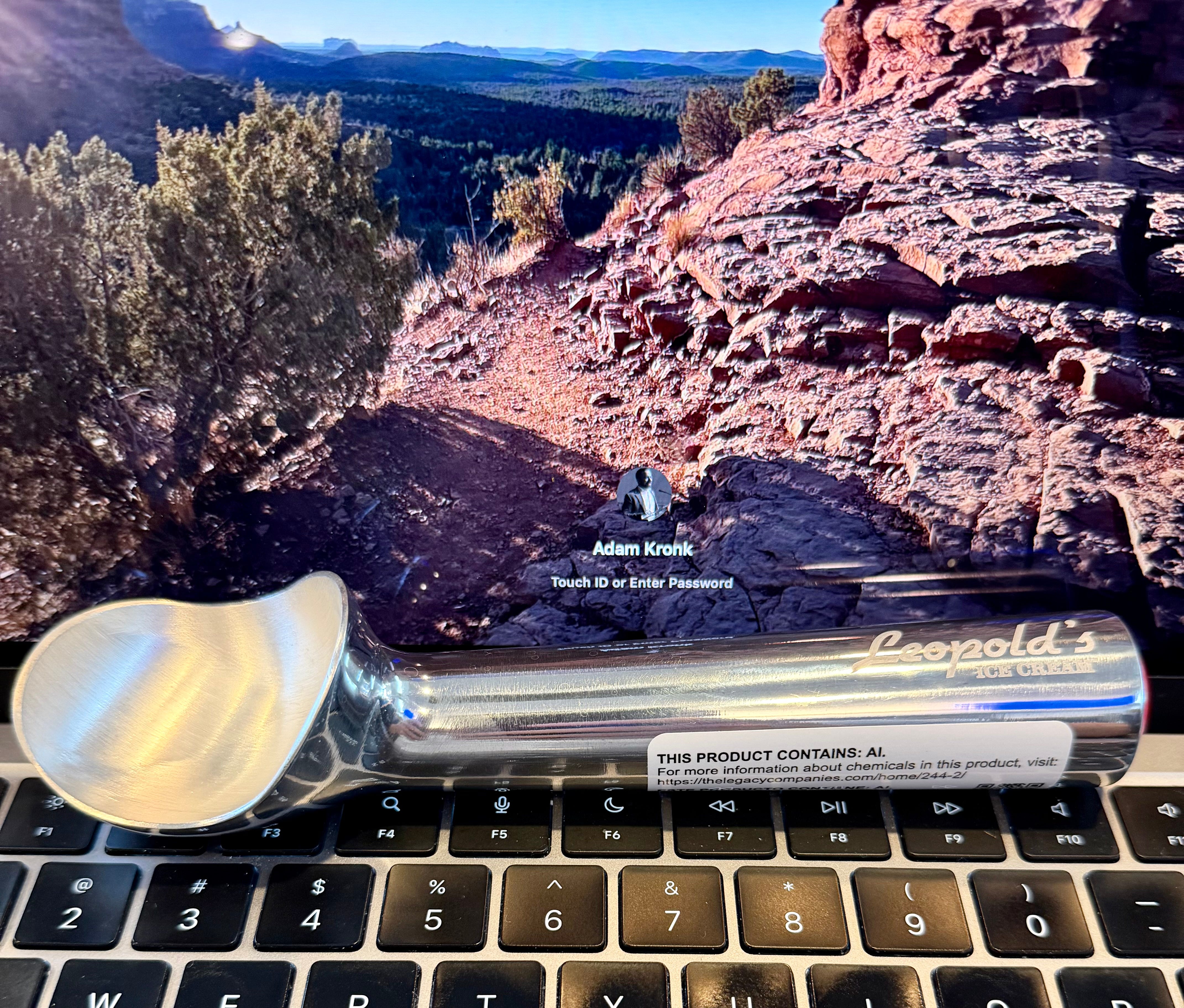
This was after I had parted ways with Meghan, who headed for Madison from Savannah while I returned to Silicorn Valley (not a typo), our self-deprecating nickname for Indiana. But before we struck out on our own paths, we split an ice cream sandwich from the legendary Leopold’s. We simply couldn’t return to the eleventh floor of Flanner Hall and face our colleague, Scott, the consummate connoisseur of frozen confections, without having sampled something from the storied shop. Oh, my friends, it was good. And at the register, I made an impulse purchase as a memento—the Platonic form of ice cream scoops (about which I had read in a recent Wirecutter, believe it or not), engraved with the name of the iconic ice cream joint. For a good laugh, check the warning label on the handle.